
Sequence Risk at Market Highs
Markets at highs with narrow leadership can increase sequence risk. Understand how concentrated gains affect retirement income planning and withdrawal timing.
4/25/20262 min read
Weekly Market Snapshot
U.S. equities moved modestly higher this week.
The S&P 500 gained 0.55%
The Nasdaq Composite advanced 1.50%
The Russell 2000 rose 0.36%
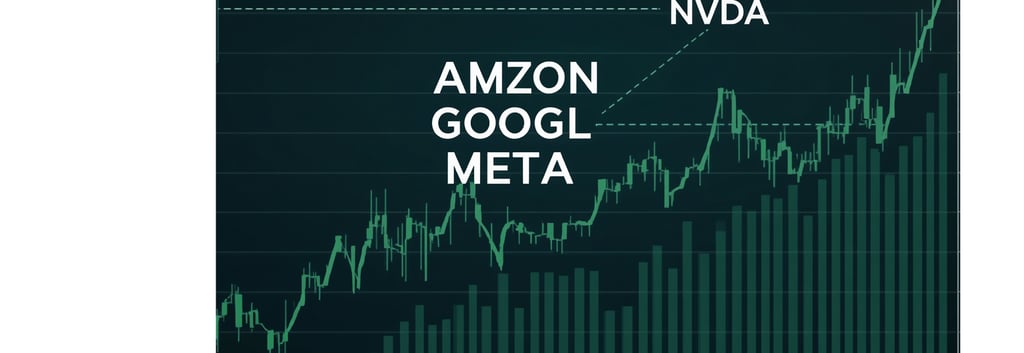
Gains were supported by continued earnings strength, particularly within large cap technology. Semiconductor companies stood out, with several reaching new all time highs.
There was also some attention on Federal Reserve leadership, as Kevin Warsh made remarks during the week. While not policy setting, markets showed sensitivity to potential future direction at the Fed.
What Changed Beneath the Surface
The more important development this week was the concentration of market leadership.
A narrow group of large cap technology names, particularly within semiconductors, continued to drive index level performance. Energy stocks also contributed, though to a lesser extent.
At the same time:
A large portion of the S&P 500 remains below prior highs
Many companies are still recovering from the recent drawdown
Index strength is increasingly tied to a small number of stocks
This is not unusual, but it is structurally important. Market averages are rising, while underlying participation remains uneven.
What This Means for Retirement Income Planning
Here’s where this becomes important.
When market gains are driven by a small number of companies, sequence-of-returns risk becomes less visible, but more relevant.
For retirees or those approaching retirement:
Withdrawals taken during periods of narrow leadership can create hidden risk
Portfolio performance may lag headline indices depending on diversification
Recovery paths are less predictable if leadership rotates
In other words, the index may appear strong, but the experience of an income portfolio can differ meaningfully.
This matters most when withdrawals are occurring during or shortly after a drawdown. If returns are uneven across the market, the order in which those returns occur, not just the average, can materially affect long term income sustainability.
Takeaway
Markets often move on the strength of a few dominant companies. What matters is not whether this continues, but how a portfolio is structured to withstand both concentrated gains and eventual rotation. Income durability is shaped less by index levels and more by how returns are distributed over time.
Clarity Going Forward
The challenge is not predicting which stocks will lead next, but understanding how current conditions affect withdrawal timing.
Stress testing different return sequences can help clarify how sensitive a plan is to early losses or uneven recoveries. This is where a sequence-of-returns risk calculator becomes useful, isolating the impact of timing rather than averages. Give ours a try below